
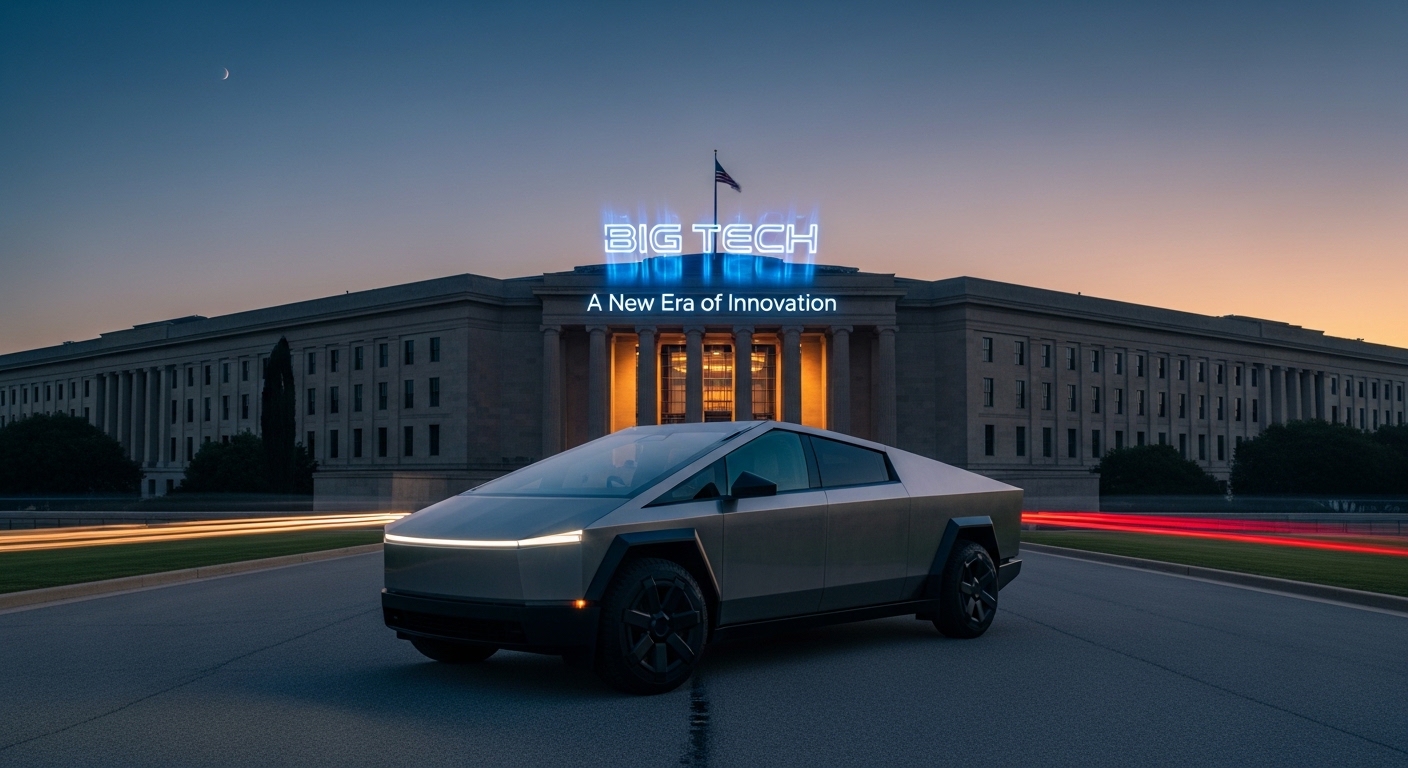

The landscape of defense technology is evolving, and a significant shift has taken place with the Pentagon’s recent embrace of innovation through partnerships with Pentagon Big Tech Tesla Cybertruck. Among these trailblazers stands Tesla, known for revolutionizing the automotive industry. This collaboration promises to bridge advanced technology with national security needs, introducing groundbreaking solutions that can redefine military operations. Recently making headlines was the unveiling of Tesla’s Cybertruck at none other than the Pentagon itself—a striking event that symbolizes not just a new vehicle but also a bold step into an era where cutting-edge tech meets defense readiness. What does this partnership mean for both industries? Let’s explore how this unique alliance is poised to transform our understanding of modern warfare and government capabilities.
The history of Tesla and its impact on the automotive industry
Tesla, founded in 2003, disrupted the automotive landscape with its ambitious vision for electric vehicles. Elon Musk’s leadership transformed the brand into a powerhouse synonymous with innovation.
Early models like the Roadster showcased the potential of electric propulsion. They shattered preconceived notions about EVs being slow and boring. This was just the beginning.
The Model S took Tesla to new heights, setting benchmarks in performance and technology. It not only accelerated rapidly but also offered advanced autopilot features that captivated consumers.
As demand surged, traditional automakers recognized their vulnerability. Many began to pivot toward electrification, igniting a race for dominance in sustainable transport.
Tesla’s influence extended beyond cars; it reshaped industry standards around battery technology and manufacturing practices. Today, it’s more than an automaker—it’s a catalyst for change within one of the world’s most critical sectors.
The unveiling of the Tesla Cybertruck at the Pentagon
The unveiling of the Tesla Cybertruck at the Pentagon marked a significant shift in military innovation. Amidst high-security protocols, the event drew attention from tech enthusiasts and defense experts alike.
Elon Musk presented the vehicle as more than just an electric truck. It symbolizes a fusion of cutting-edge technology and military utility. The sleek, angular design caught many off guard, challenging traditional aesthetics in military vehicles.
Attendees marveled at its durable exoskeleton made from ultra-hard steel. This feature promises enhanced protection in demanding environments. Additionally, its all-electric powertrain garnered excitement for sustainability within defense operations.
As discussions unfolded around potential applications, it became clear that this was not merely about transportation but redefining operational capabilities for armed forces. The energy surrounding the event hinted at broader implications for future collaborations between Big Tech and government entities.
Features and capabilities of the Cybertruck
The Tesla Cybertruck stands out with its bold, angular design made from ultra-hard 30X cold-rolled stainless steel. This robust exterior not only turns heads but also offers unparalleled durability against impacts.
Equipped with advanced self-driving features, the Cybertruck leverages Tesla’s cutting-edge AI technology. It can navigate complex terrains and adapt to various driving conditions seamlessly.
Its impressive towing capacity of over 14,000 pounds makes it highly functional for both civilian and military applications. Whether hauling equipment or personnel, this vehicle is built to handle demanding tasks.
Inside, the spacious cabin boasts a minimalist aesthetic packed with high-tech interfaces. A massive touchscreen controls everything from navigation to climate settings, delivering an intuitive user experience.
With all-wheel drive capabilities and air suspension that adjusts ride height based on load requirements, the Cybertruck is prepared for anything—making it a game-changer in mobility solutions for diverse environments.
Potential uses for military and government agencies
The Tesla Cybertruck holds immense potential for military and government applications. Its robust design and advanced technology make it a versatile vehicle in various scenarios.
Imagine the Cybertruck serving as an all-terrain transport unit, effortlessly navigating challenging environments. The armored body could protect personnel while providing essential mobility during missions.
Additionally, its electric powertrain offers stealth advantages. Silent operation can be crucial for covert operations where noise discipline is vital.
Equipped with cutting-edge tech features like autonomous driving capabilities, it could assist in reconnaissance missions or logistics support without putting human lives at risk.
Moreover, the integration of AI systems allows for real-time data analysis on the battlefield, enhancing situational awareness and decision-making processes.
As agencies seek to modernize their fleets, vehicles like the Cybertruck may redefine operational strategies across military branches and governmental organizations alike.
Impact on traditional defense contractors
The emergence of the Pentagon Big Tech Tesla Cybertruck marks a significant shift in defense contracting. Traditional defense contractors, known for their longstanding relationships with government agencies, face new challenges.
These giants have relied on established manufacturing processes and designs that can take years to develop. Now, they must adapt quickly or risk obsolescence as innovative technologies enter the arena.
With its cutting-edge design and electric capabilities, the Cybertruck introduces competition that is hard to ignore. Companies like Lockheed Martin and Raytheon may need to rethink their strategies if they want to stay relevant.
This disruption encourages innovation across the board. As traditional players respond to this challenge, we could see groundbreaking advancements in military technology that push boundaries further than ever before. The game has changed; how will these companies react?
Future developments and collaborations between Big Tech and the Pentagon
The future of collaboration between Big Tech and the Pentagon is brimming with possibilities. Companies like Tesla are just the beginning. The integration of AI, data analytics, and advanced machinery into defense strategies will reshape national security.
As technology evolves, expect to see more tailored solutions for military needs. Cybersecurity measures will become paramount as threats grow in sophistication. Partnerships may extend beyond vehicles to include drone technology and surveillance systems.
Moreover, collaboration could foster innovation hubs within military environments. This would allow tech companies to develop cutting-edge tools directly aligned with defense objectives.
Emerging technologies such as 5G networks promise enhanced communication capabilities on battlefields. Such advancements can significantly improve coordination among troops and equipment.
Investment in research initiatives could lead to breakthroughs beneficial not only for defense but also for civilian applications down the line. Exciting times lie ahead as these partnerships pave new avenues in both sectors.
Conclusion: Embracing technology for a more advanced future
The collaboration between the Pentagon and Big Tech marks a significant turning point in how modern defense operates. The Pentagon Big Tech Tesla Cybertruck, with its innovative design and advanced features, stands as a symbol of this new era. Its robust capabilities could redefine military applications and enhance operational efficiency.
As we look to the future, it’s clear that technology will play an increasingly vital role in shaping defense strategies. The potential for further partnerships between tech giants and government agencies is immense. This synergy can lead to groundbreaking advancements not just within military frameworks but across various sectors.
Embracing such innovations ensures that both military operations and civilian life benefit from cutting-edge developments. By harnessing the power of companies like Tesla, governments can position themselves at the forefront of technological advancement, ultimately fostering a safer and more efficient world for all.
