
A decade ago, the average Pakistani woman’s skincare routine consisted of a face wash, a moisturiser, and perhaps a sunblock on particularly bright days. The concept of layering five or more products in a specific sequence would have sounded excessive—bordering on absurd. Yet scroll through Pakistani beauty forums, TikTok compilations, or Instagram reels today, and the five-step Korean skincare routine has become something closer to a shared language among urban skincare enthusiasts.
What the 5-Step Routine Actually Looks Like
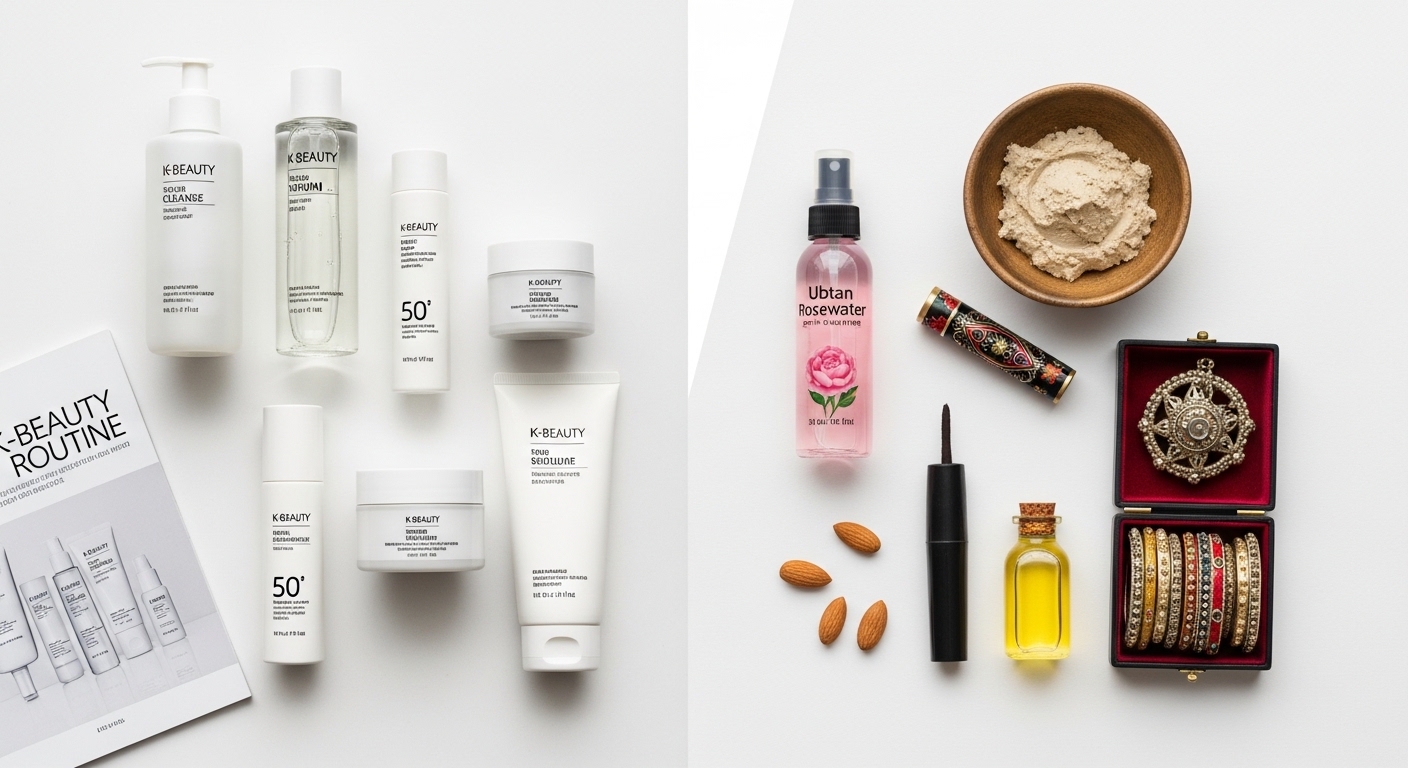
The Korean approach to skincare is built on a philosophy of layering: each product performs a specific function, applied in a sequence designed to maximise absorption and efficacy. The simplified five-step version—adopted widely by Pakistani consumers who find the full ten-step Korean protocol impractical—breaks down as follows.
Step one is the double cleanse. An oil-based cleanser removes makeup and sunscreen, followed by a water-based cleanser that addresses sweat, dirt, and remaining residue. In Pakistan’s urban centres, where pollution levels in cities like Lahore regularly rank among the world’s worst, this two-phase cleansing addresses a genuine environmental concern that a single face wash cannot match.
Step two is toner. Korean toners differ fundamentally from the alcohol-heavy astringents that many Pakistani consumers grew up using. K-Beauty toners are hydrating preparations designed to rebalance the skin’s pH after cleansing and prepare it to absorb subsequent layers more effectively. This reconceptualisation of what a toner does has been one of the most significant mindset shifts for new adopters.
Step three is treatment—serums or essences targeting specific concerns. Niacinamide for dark spots, hyaluronic acid for dehydration, centella asiatica for inflammation. This is where personalisation enters the routine, and it is the step that has most captured Pakistani consumers’ imagination because it transforms skincare from a generic activity into a targeted intervention.
Step four is moisturiser, sealing in everything beneath it. Step five, arguably the most critical, is broad-spectrum SPF. Korean sunscreen formulations, known for their lightweight textures and lack of white cast on darker skin tones, have been a revelation for Pakistani users who previously avoided sunscreen because available options felt greasy or left a visible residue.
The Cultural Shift Behind the Routine
Adopting a structured skincare routine requires a cultural shift as much as a practical one. In Pakistan, skincare has traditionally been embedded in home remedies—ubtan before weddings, multani mitti face packs, rose water as toner. These practices are effective in their own right, but they are episodic rather than daily.
The Korean approach introduces the concept of skincare as daily maintenance rather than occasional treatment. That philosophical shift—from reactive to preventive—is what has resonated most deeply with Pakistani millennials and Gen Z consumers. The idea that consistent, daily attention to skin health yields better long-term results than periodic intensive treatments aligns with a broader generational move toward wellness as a lifestyle rather than a crisis response.
There is also a ritualistic appeal. For many Pakistani women juggling demanding work schedules, household responsibilities, and social obligations, the five-step routine has become a form of structured self-care—a few minutes each morning and evening that are entirely their own. The routine itself becomes the reward, a small daily act of intentional attention to personal wellbeing.
Social Media as the Classroom
The adoption of K-Beauty routines in Pakistan owes an enormous debt to social media. Pakistani beauty creators have translated Korean skincare education into locally relevant content—demonstrating products on South Asian skin tones, addressing local concerns like hard water damage and dust exposure, and explaining how to adapt routines for Pakistan’s varied climate zones. These creators function less as influencers and more as educators, building trust through transparency about what works and what does not.
The accessibility of skincare products online has further accelerated adoption. Platforms like Naheed.pk have made it possible for consumers outside major cities to access Korean skincare products that were previously available only through informal import channels or expensive trips abroad. The combination of digital education and expanded retail access has created a feedback loop: the more consumers learn about ingredient-driven skincare online, the more they seek out specific products, which in turn drives further content creation and community discussion.
Is the 5-Step Routine Sustainable Long-Term?
Sceptics argue that multi-step routines are a marketing construct designed to sell more products. There is some validity to that concern—no one needs fifteen serums. But the five-step Korean framework, in its streamlined form, is less about excess and more about intentionality. Each step has a distinct, evidence-backed purpose.
For Pakistani consumers navigating a market flooded with vague product claims, the structured Korean approach offers something valuable: a framework. It teaches consumers to think about skincare in terms of function rather than brand loyalty, to read ingredient lists rather than rely on packaging, and to build routines based on their specific skin concerns rather than following a single celebrity endorsement.
Whether the five-step routine endures as a cultural norm or evolves into something distinctly Pakistani—perhaps merging Korean ingredient science with traditional South Asian botanicals—remains to be seen. But the underlying shift it represents, toward informed, intentional, and consistent skincare, shows no sign of reversing. If anything, the conversation is deepening as more consumers move from curiosity to commitment.
