
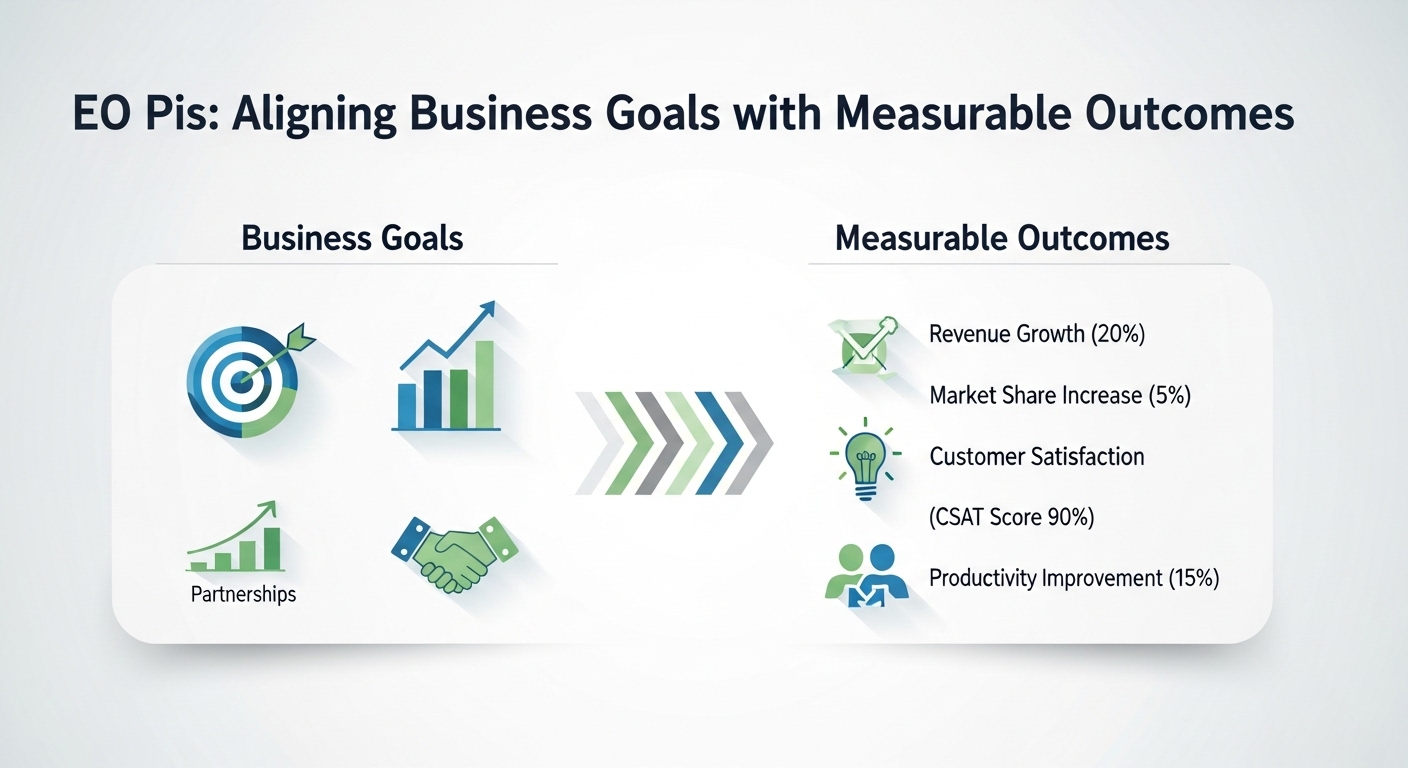

In today’s fast-paced business landscape, having a vision is not enough. Companies need clear pathways to achieve their goals and measure success. Enter EO Pis—Essential Outcome Performance Indicators. These powerful tools bridge the gap between lofty objectives and tangible results. By aligning your business goals with measurable outcomes, you can steer your organization toward lasting success.
Imagine knowing exactly how close you are to achieving your targets at any given moment. Picture a workplace where every team member understands their role in reaching those milestones. That’s the potential of implementing EO Pis effectively! They’re more than just metrics; they’re a roadmap guiding businesses through challenges and opportunities alike.
Are you ready to elevate your performance game? Let’s dive deeper into what makes EO Pis indispensable for modern enterprises!
The Benefits of Setting Clear and Measurable Outcomes
Setting clear and measurable outcomes transforms the way businesses operate. It provides a roadmap for success, ensuring that every team member understands their role in achieving goals.
When outcomes are specific, teams can focus their efforts. This clarity reduces confusion and enhances productivity. Employees know what is expected of them, leading to better performance.
Measurable outcomes also facilitate accountability. When results can be quantified, it becomes easier to track progress over time. Teams can celebrate small wins along the way, boosting morale.
Moreover, these outcomes guide decision-making processes. Leaders can analyze data to assess strategies and make informed adjustments as needed.
Incorporating measurable targets fosters a culture of continuous improvement within an organization. Teams learn from both successes and setbacks while striving towards greater achievements together.
Step-by-Step Guide to Creating EO Pis
Creating effective EO Pis involves a clear process that aligns your business goals with measurable outcomes. Start by identifying your primary objectives. What do you want to achieve in the short and long term?
Next, define specific key performance indicators (KPIs) related to those objectives. These should be quantifiable metrics that reflect progress.
After establishing KPIs, set realistic targets for each indicator. Consider what success looks like and ensure these targets are challenging yet attainable.
Then, develop an action plan detailing the steps needed to reach these targets. Assign responsibilities within your team for accountability.
Establish a timeline for regular reviews of your EO Pis. Consistent monitoring allows you to adapt strategies as necessary while keeping everyone aligned toward common goals.
Examples of Effective EO Pis in Action
One remarkable example of effective EO Pis in action can be seen in a tech startup focusing on software development. They set an EO Pi to increase user engagement by 30% within six months. By implementing targeted marketing strategies and enhancing user experience, they not only met their goal but exceeded it.
Another instance is found in a retail company aiming for a 20% increase in sales through its online platform. They established clear metrics such as website traffic and conversion rates, adjusting tactics based on real-time data. This proactive approach led to achieving their target ahead of schedule.
A nonprofit organization also showcases the power of EO Pis. Their objective was to raise awareness about local environmental issues by reaching 10,000 community members within one year. Through workshops and social media campaigns, they successfully engaged over 15,000 individuals, amplifying their message significantly.
Common Pitfalls to Avoid When Setting EO Pis
One common pitfall in setting EO Pis is lack of specificity. Vague goals lead to confusion and misalignment among team members. Ensure that each outcome clearly defines what success looks like.
Another mistake is neglecting the importance of stakeholder involvement. Engaging relevant parties fosters commitment and provides diverse perspectives, making your EO Pis more robust.
Overly ambitious targets can also derail progress. While aiming high is admirable, unrealistic expectations may demotivate your team if they feel overwhelmed or unable to achieve them.
Additionally, failing to regularly review and adjust your EO Pis can be detrimental. The business landscape shifts rapidly; staying flexible allows you to adapt as needed.
Ignoring data validation can result in misguided strategies. Always ensure that the metrics used are reliable for measuring true performance against your desired outcomes.
Implementing and Tracking EO Pis in Your Business
Implementing EO Pis in your business requires a strategic approach. Start by communicating your objectives clearly to the entire team. Make sure everyone understands their roles and how they contribute to these goals.
Utilize project management tools for tracking progress. Platforms like Asana or Trello can help visualize tasks and deadlines, ensuring accountability.
Regular check-ins are essential. Schedule weekly meetings to discuss advancements and challenges related to EO Pis. This fosters an environment of transparency and collaboration.
Incorporate feedback loops into your process. Encourage team members to share insights on what’s working and what isn’t, allowing for real-time adjustments.
Celebrate milestones achieved through effective tracking of EO Pis. Recognition boosts morale and keeps motivation high across the organization.
Conclusion: The Power of Aligning Business Goals with Measurable Outcomes for Success
Aligning business goals with measurable outcomes is a game-changer for any organization. By implementing EO Pis, companies can create a clear path towards achieving their objectives while maintaining accountability and transparency.
The process of setting these indicators encourages teams to think critically about what they want to accomplish and how success will be measured. With well-defined EO Pis, every member of the team knows what they are aiming for, fostering collaboration and motivation.
Tracking progress against these metrics allows businesses to pivot when necessary or double down on strategies that are working well. The data derived from EO Pis provides valuable insights into performance trends, facilitating better decision-making in real-time.
Embracing this approach cultivates a culture of continuous improvement within organizations. When everyone understands the connection between daily activities and overarching goals, it becomes easier to stay focused on results that truly matter.
Harnessing the power of EO Pis transforms abstract ambitions into concrete achievements—driving growth and ensuring long-term success for your business.
