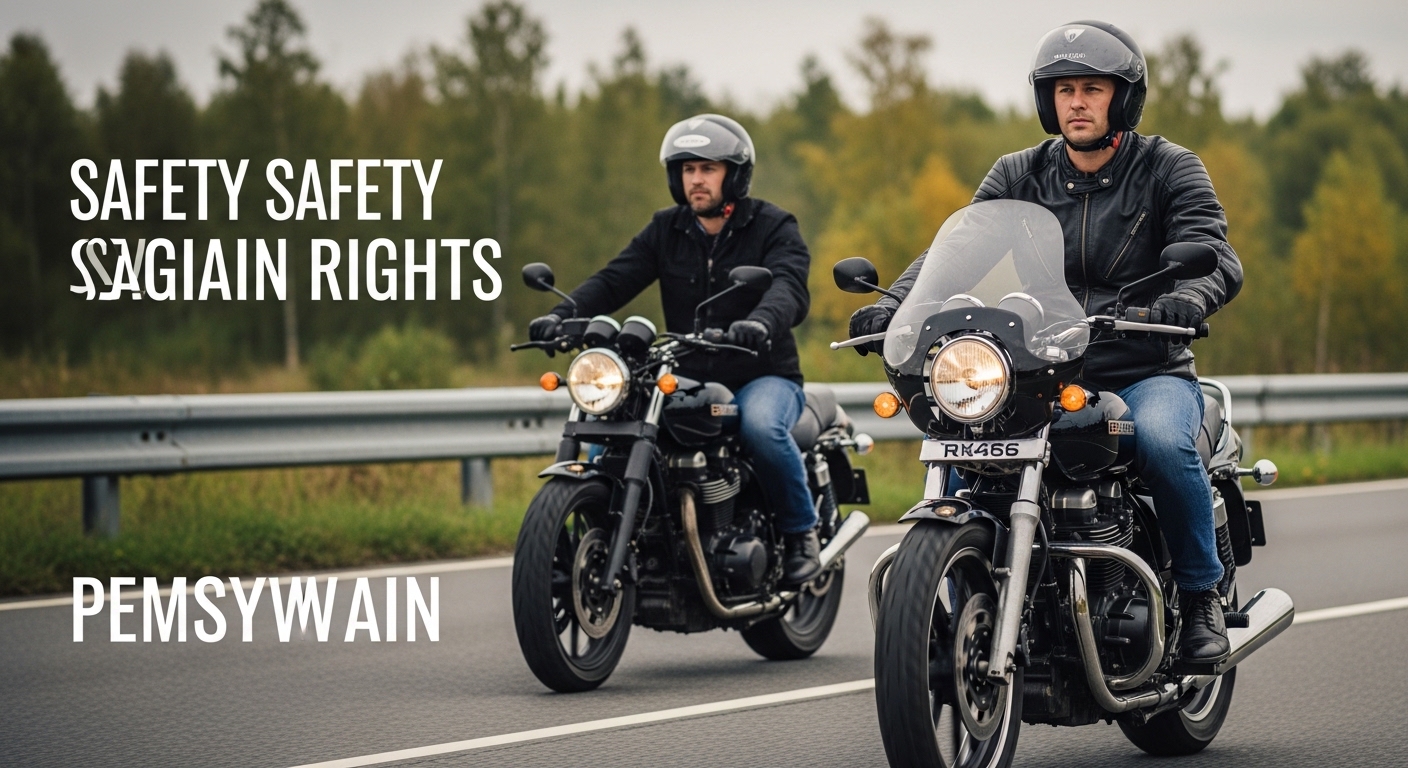

Motorcycles offer a freedom that other vehicles simply cannot match, but that freedom comes with elevated risk. Riders lack the structural protection of an enclosed vehicle, making them far more vulnerable in collisions. In Pennsylvania, motorcycle crashes result in disproportionately high rates of serious injury and death compared to passenger vehicle accidents.
Understanding both the safety practices that reduce your risk and the legal rights that protect you after an accident is essential for every rider on Pennsylvania roads.
Pennsylvania Motorcycle Laws Every Rider Should Know
Helmet Requirements
Pennsylvania’s helmet law is more nuanced than many riders realize. Under 75 Pa.C.S. § 3525, all motorcycle operators and passengers under 21 years of age are required to wear a helmet approved by the Department of Transportation. Riders 21 and older are exempt from the helmet requirement if they have at least two years of riding experience or have completed a motorcycle safety course approved by PennDOT.
While experienced riders over 21 may legally choose not to wear a helmet, this decision can affect a personal injury claim. companies and defense attorneys often argue that a rider’s failure to wear a helmet contributed to the severity of their head injuries, potentially reducing the damages they can recover.
Eye Protection
All motorcycle operators in Pennsylvania are required to wear protective eye equipment unless the motorcycle is equipped with a windscreen that meets PennDOT specifications. This requirement applies regardless of age or experience level.
Lane Splitting
Pennsylvania does not currently permit lane splitting, which is the practice of riding a motorcycle between lanes of stopped or slow-moving traffic. Riders who engage in lane splitting and are involved in an accident may be found partially or fully at fault, which can significantly affect their ability to recover compensation under the state’s comparative negligence law.
Common Causes of Motorcycle Accidents
Understanding why motorcycle accidents happen helps riders anticipate and avoid dangerous situations. The most common causes of motorcycle crashes in Pennsylvania include the following.
- Left-turn collisions. The single most common type of motorcycle accident occurs when a car or truck turns left in front of an oncoming motorcycle. Drivers frequently fail to see motorcycles or misjudge their speed, resulting in devastating broadside collisions.
- Rear-end crashes. Motorcycles stop more quickly than many drivers expect. When a car follows too closely and the motorcycle brakes suddenly, the rider can be thrown from the bike or crushed between vehicles.
- Distracted driving. Drivers who are texting, adjusting GPS, or otherwise distracted are less likely to notice a motorcycle sharing the road, especially at intersections and during lane changes.
- Impaired driving. Alcohol and drug impairment remain leading factors in motorcycle fatalities across Pennsylvania.
- Road hazards. Potholes, gravel, wet leaves, railroad crossings, and uneven pavement pose far greater danger to motorcycles than to four-wheeled vehicles.
Anti-Rider Bias and How It Affects Claims
One of the most significant challenges motorcycle accident victims face is anti-rider bias. Many people, including jurors, adjusters, and even some law enforcement officers, carry negative assumptions about motorcyclists. They may assume that the rider was speeding, weaving through traffic, or behaving recklessly, regardless of what actually happened.
This bias can influence every stage of a personal injury claim. Police officers may assign fault to the rider without thoroughly investigating the crash. adjusters may offer lower settlements based on the assumption that the rider contributed to the accident. And at trial, jurors may be predisposed to sympathize with the driver rather than the motorcyclist.
Overcoming anti-rider bias requires thorough evidence, including witness testimony, accident reconstruction, and dashcam or surveillance footage that clearly shows what happened. Working with Lehigh Valley personal injury lawyers who have experience handling motorcycle accident cases is particularly valuable because they understand these biases and know how to counteract them effectively.
Your Rights After a Motorcycle Accident in Pennsylvania
Motorcycle riders have the same legal rights as any other motorist involved in an accident. You are entitled to pursue compensation for medical expenses, lost wages, pain and suffering, and other damages caused by another driver’s negligence. Pennsylvania’s comparative negligence rule under 42 Pa.C.S. § 7102 applies to motorcycle accidents just as it does to car crashes. As long as you are not found to be 51 percent or more at fault, you can recover damages, reduced by your percentage of responsibility.
Pennsylvania’s choice of tort system (75 Pa.C.S. § 1705) also applies to motorcyclists. However, because motorcycle policies often differ from standard auto policies, riders should review their coverage carefully to understand their options for recovery.
Steps to Protect Yourself After a Crash
- Call 911 and seek medical attention. Even if your injuries seem minor, get evaluated by a medical professional. Adrenaline can mask serious injuries for hours after a crash.
- Document the scene. Photograph vehicle damage, road conditions, traffic signals, skid marks, and your injuries. Collect contact information from witnesses.
- Do not admit fault. Avoid making statements about what caused the crash. Let the investigation determine fault.
- Preserve your gear. Your helmet, jacket, gloves, and boots are evidence. Do not discard or repair damaged gear until your claim is resolved.
- Avoid recorded statements. Decline to give a recorded statement to the other driver’s company until you have consulted with an attorney.
Riding Safely in the Lehigh Valley
Eastern Pennsylvania’s road network presents specific challenges for motorcyclists. Route 22 and I-78 carry heavy truck traffic. Rural roads in the surrounding counties have sharp curves, limited visibility, and wildlife crossings. Urban intersections in Allentown, Bethlehem, and Easton create constant exposure to left-turn collisions and distracted drivers.
Defensive riding, proper gear, ongoing rider education, and awareness of your legal rights are the best tools for staying safe and protecting yourself if an accident occurs. Pennsylvania law protects your right to ride and your right to compensation when another driver’s negligence puts you at risk.
