
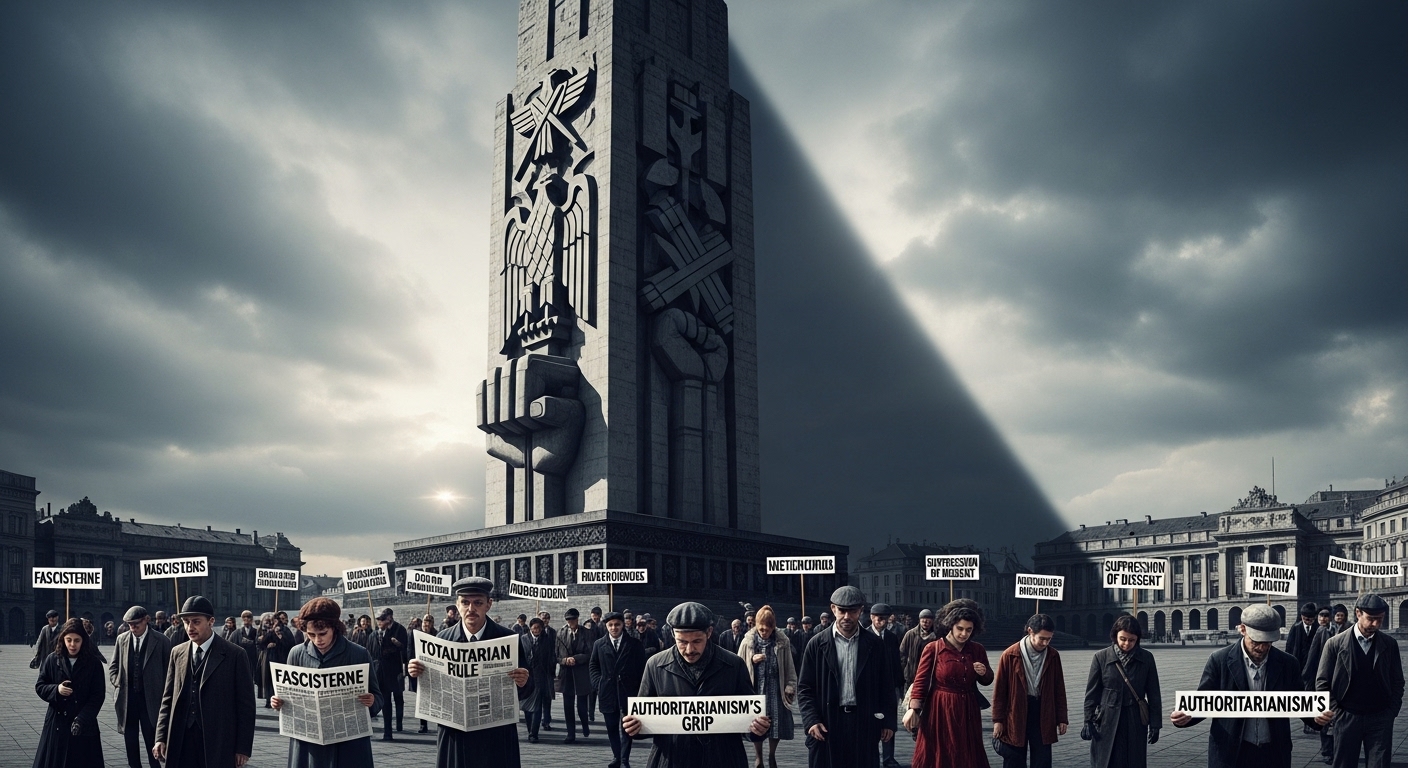

Fascism is a term that evokes strong emotions and vivid images of turmoil. Its origins are rooted in the aftermath of World War I, as nations grappled with economic instability and social unrest. In this chaotic landscape, authoritarian ideologies emerged, promising order and national revival but often at the cost of individual freedoms. As we delve into fascisterne—this complex legacy—we’ll explore how these regimes rose to power in Europe, their defining characteristics, and the devastating impact they had on society.
But it’s not just history; echoes of fascism can be felt today as certain movements resurface across the globe. Understanding this dark chapter is crucial for recognizing its signs in our modern world. Join us as we unpack the past while considering our responsibility to ensure it doesn’t repeat itself.
The Rise of Fascism in Europe
The rise of fascism in Europe emerged during the tumultuous aftermath of World War I. Economic instability and social unrest created fertile ground for extreme ideologies. Disillusionment with traditional politics pushed many toward radical solutions.
Countries like Italy and Germany became epicenters of this movement. Leaders such as Benito Mussolini and Adolf Hitler tapped into nationalistic fervor, promising to restore their nations’ former glory. They capitalized on public fears, framing themselves as saviors amidst chaos.
Fascist parties gained traction by employing propaganda that glorified strength and unity while vilifying perceived enemies—often minorities or political dissidents. This messaging resonated deeply within societies struggling to find stability.
As these movements grew stronger, they began dismantling democratic institutions. The allure of order overshadowed the importance of freedom for many citizens, paving the way for totalitarian rule across Europe’s landscape.
Characteristics of a Fascist Regime
Fascist regimes are marked by a unique set of characteristics that distinguish them from other forms of governance. Central to these regimes is an authoritarian leadership style, often embodied by a single leader who exerts total control.
Another defining feature is the emphasis on nationalism. Fascists promote a sense of unity and superiority among their citizens, often glorifying their nation’s past while demonizing outsiders or minority groups.
Censorship plays a significant role as well. Freedom of expression is severely restricted; media outlets become state-controlled instruments for propaganda. Dissent is not tolerated, creating an atmosphere where fear prevails.
Militarization also defines fascism. A strong military presence becomes essential in both domestic and foreign policies, with power often maintained through violence and intimidation.
A rigid class structure typically exists under fascism, where loyalty to the regime supersedes individual rights and freedoms. The result is a society that prioritizes conformity over diversity.
Suppression and Oppression under Fascist Rule
Under fascist rule, suppression becomes a tool for maintaining power. Dissent is not tolerated. Political opponents are silenced through fear and violence.
Censorship pervades the media landscape. Independent journalism faces relentless attacks as propaganda takes its place. The narrative is tightly controlled, shaping public perception to align with the regime’s goals.
Civil liberties vanish as surveillance intensifies. Citizens live in constant fear of being watched or reported by their neighbors. Trust erodes within communities, making unity nearly impossible.
Education also falls under strict scrutiny. Schools teach loyalty to the state over critical thinking or individual rights. Young minds are molded into obedient subjects, stripped of any semblance of autonomy.
The repression extends beyond politics; cultural expression suffers too. Artists and intellectuals face persecution if their work challenges official ideology, leading to a stifled creative environment devoid of diversity and innovation.
The Impact of Fascism on Society
Fascism profoundly alters societal structures. It breeds an environment of fear and suspicion among citizens. Individual freedoms are stifled, leading to a culture where dissent is often silenced.
Communities become polarized, with loyalty to the regime overshadowing mutual respect. This division fosters hatred and mistrust between different groups, which can persist for generations.
Economic policies under fascist regimes typically prioritize military expansion over social welfare. As a result, many individuals face poverty while resources are diverted away from essential services like healthcare and education.
Cultural expression suffers as well. Art, literature, and music that criticize or challenge the state’s narrative are suppressed or manipulated to align with government propaganda. However, the richness of diverse voices gets replaced by monotonous messaging designed to maintain control.
The legacy of such oppression leaves scars on society long after authoritarian rule ends. Healing takes time but remains crucial for future progress and unity.
Examples of Fascist Regimes throughout History
Fascism has left an indelible mark on history, with several regimes epitomizing its principles. Mussolini’s Italy is often the first example that comes to mind. His rule from 1922 saw a blend of nationalism and authoritarian control, shaping the Italian state to reflect his vision.
Germany under Adolf Hitler represents another dark chapter. The Nazi regime was characterized by extreme anti-Semitism and aggressive militarism, leading to devastating consequences in Europe during World War II.
Spain’s Francisco Franco led a fascist dictatorship after the Spanish Civil War, emphasizing suppression of dissent and centralization of power for decades.
Additionally, lesser-known regimes like those in Hungary under Miklós Horthy or Romania under Ion Antonescu reveal how fascist ideologies permeated various regions with unique adaptations. Each case illustrates different facets of fascist governance while sharing core elements that fueled oppression and division across societies.
Resurgence of Fascism in Modern Times
In recent years, there has been a troubling resurgence of fascism across various parts of the globe. This revival often manifests in nationalist rhetoric and anti-immigrant sentiments. Social media platforms amplify these ideologies, allowing them to spread rapidly.
Populist leaders exploit economic anxieties and cultural fears, drawing followers with promises of restoring national pride. Many citizens feel disillusioned by traditional politics, making them susceptible to extremist views.
Protests against marginalized communities have surged alongside this movement. The sense of division intensifies as people cling to radical solutions for complex societal issues.
Young individuals are particularly affected; they encounter these ideals online in echo chambers that reinforce hateful beliefs. As history shows, such trends can lead societies down dangerous paths if left unchecked. Awareness is crucial now more than ever as we navigate this unsettling landscape together.
Combating Fascism: Importance of Education and Awareness
Education serves as a powerful tool in the fight against fascism. By understanding its history and ideology, individuals can recognize the signs of authoritarianism before it takes hold.
Awareness is crucial. Discussions about human rights, freedom, and democracy should be at the forefront of educational curricula worldwide. These conversations empower people to challenge oppressive narratives.
Moreover, promoting critical thinking helps combat misinformation. When individuals learn to question sources and analyze content critically, they become less susceptible to propaganda often associated with fascist movements.
Civic engagement also plays a vital role. Encouraging participation in community events fosters solidarity among diverse groups. This unity acts as a barrier against divisive ideologies that seek to isolate and control.
Fostering empathy through storytelling allows us to connect deeply with those affected by oppression. However, understanding their experiences cultivates compassion—a necessary ingredient for social change against fascist ideologies.
Conclusion: The Ongoing Fight Against Fascism
The fight against fascism is far from over. As societies grapple with the echoes of authoritarian rule, awareness and education become crucial weapons in this ongoing battle. Moreover, understanding the historical context of fascist regimes helps to illuminate their tactics and ideologies. It also empowers individuals to recognize early warning signs in modern politics.
Communities must engage in open dialogues about democracy’s fragility. This includes promoting values such as tolerance, diversity, and respect for human rights. Education plays a pivotal role here; it fosters critical thinking that can dismantle extremist narratives.
Today’s resurgence of authoritarian rhetoric reminds us that vigilance is necessary. By learning from past mistakes, society can build resilient frameworks that reject hate and oppression. The legacy of fascism serves not only as a cautionary tale but as a call to action for current and future generations.
As we navigate these complex times, our commitment to fighting misinformation and upholding democratic ideals will shape the world we leave behind. Each individual has a part to play—standing firm against division while advocating for justice creates ripples of positive change across communities worldwide.
