
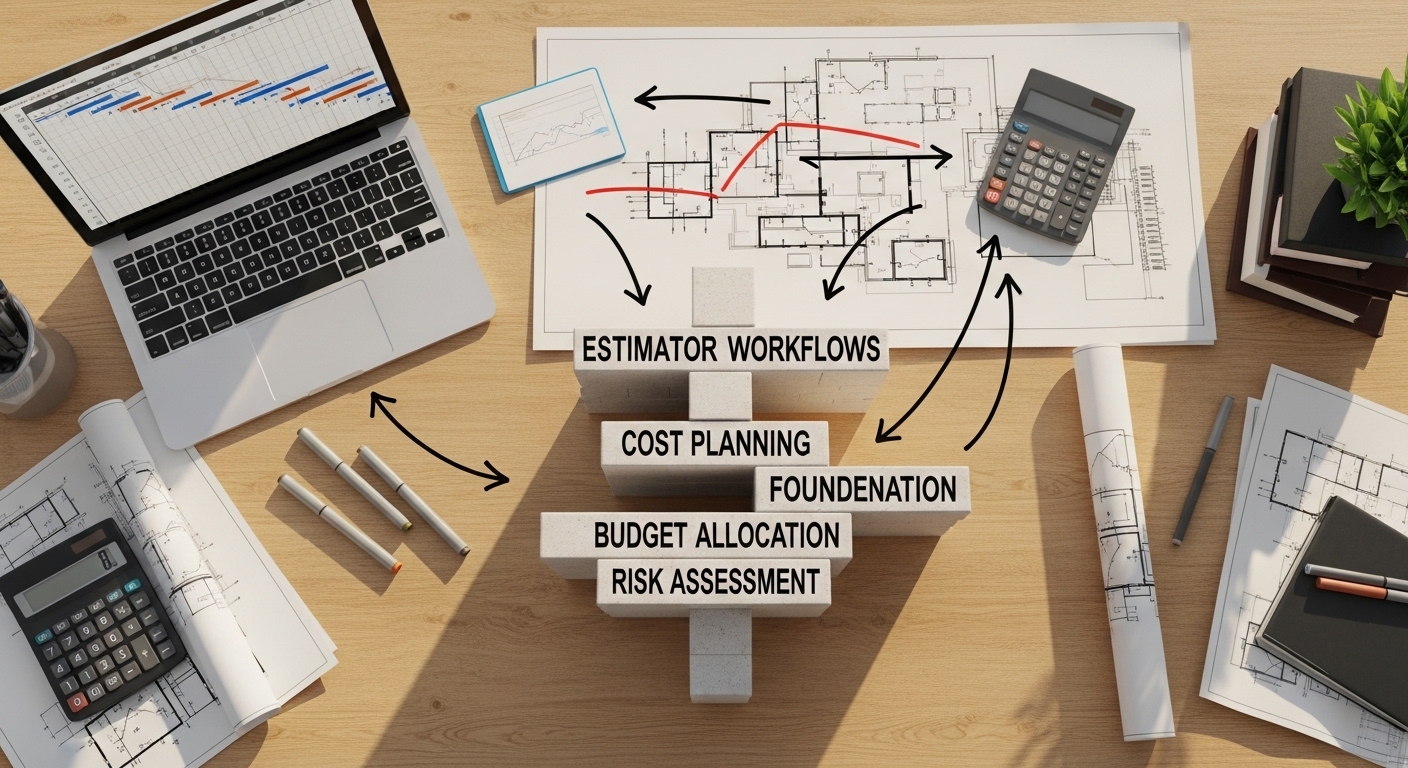

In the development industry, cost planning is the backbone of every hit challenge. Without accurate forecasting and established estimation strategies, even the most promising tasks can face delays, financial overruns, and operational inefficiencies. This is where well-designed estimator workflows are useful. They provide a scientific approach to coping with challenging statistics, and they carefully analyze and align every key detail with mission dreams.
To reap this degree of precision, many groups depend upon Electrical Estimating Companies as part of their workflow approach. These offerings introduce consistency, expertise, and superior methodologies that elevate the fine art of fee-making plans. By incorporating structured estimation practices early within the mission lifecycle, organizations can decrease dangers, enhance accuracy, and construct a stable economic basis for execution.
Understanding the Core of Workflow Efficiency
Estimator workflows are greater than just a collection of tasks—they’re a strategic framework that guides the whole fee planning process. From preliminary undertaking assessment to the very last price range approval, every step should be carefully designed to ensure efficiency and accuracy.
A nicely organized workflow removes redundancies and ensures that it captures all vital information at the right time. This approach reduces the probability of mistakes and guarantees that estimates are based on reliable data. For example, when material necessities, exertion fees, and timelines are clearly defined, the general fee planning system becomes more predictable and attainable.
Consistency is another key advantage. Standardized workflows permit organizations to duplicate successful practices across a couple of tasks, ensuring uniformity and overall performance. This saves time and complements the credibility of the business enterprise in the eyes of customers and stakeholders.
The Role of Digital Innovation in Estimation
Technology has changed how we design and finish estimator workflows. Modern gear enables groups to handle complex information, automate repetitive duties, and collaborate in real time. This level of performance is important for handling the needs of current creation initiatives.
The integration of CAD Services plays a large role in enhancing workflow accuracy. Detailed digital drawings provide a complete view of the undertaking, allowing estimators to pick out capacity challenges before they arise. This ensures that fee estimates are primarily based on unique and up-to-date facts.
Automation further complements productivity by simplifying responsibilities consisting of amount takeoffs and price projections. For example, if a mission includes 2,500 rectangular units of floor work at a projected fee, automatic systems can quickly generate a steady cost estimate. This not only saves time but also reduces the likelihood of human error, making for extra reliable outcomes.
Data-Driven Cost Planning Strategies
In modern-day production estimation, records are one of the most precious properties. A properly designed workflow leverages data at every level to improve accuracy and decision-making. By reading historic project facts, marketplace developments, and dealer pricing, agencies can create more realistic and competitive value plans.
Centralized data structures make certain that all team contributors have equal access to the same statistics. This gets rid of inconsistencies and improves collaboration throughout departments. For example, if marketplace statistics show a constant boom in fabric expenses, estimators can adjust their projections and construction estimation services, thus making sure that budgets stay correct.
Predictive insights also play a critical role in value-making plans. By identifying patterns in past projects, agencies can anticipate capacity dangers and make proactive decisions. This ahead-thinking approach is not the most effective, but it improves accuracy and enhances usual mission efficiency.
Strengthening Collaboration for Better Outcomes
Effective collaboration is critical for a hit estimator workflow. Cost-making plans entail a couple of stakeholders, including estimators, task managers, procurement groups, and clients. A nicely dependent workflow guarantees that each one of those events can speak and collaborate successfully.
Modern collaboration equipment allows teams to share records and updates in real time, ensuring that everyone stays aligned with project goals. This transparency reduces misunderstandings and ensures that selections are primarily based on correct records.
Involving unique groups inside the estimation system also leads to better consequences. Procurement teams can offer insights into dealer pricing and availability, while undertaking managers can highlight ability challenges based on their experience. This collaborative technique results in extra comprehensive and dependable cost plans.
Strategic Value of Optimized Workflows
Optimized estimator workflows provide sizable strategic benefits for corporations. They enhance performance, lessen dangers, and enhance normal assignment performance. Businesses that put money into workflow optimization frequently revel in accelerated profitability and stronger customer relationships.
Scalability is one of the most critical blessings. As companies grow, their workflows should be capable of taking care of larger and more complicated initiatives without compromising finesse. Structured techniques offer the power needed to scale operations efficiently.
The function of construction estimators has additionally advanced in this context. They are now not restrained to basic calculations but play key roles in strategic planning. By leveraging advanced tools and statistics-driven insights, estimators can offer valuable pointers that have an impact on assignment effects and aid long-term business growth.
Adapting to Future Trends in Cost Planning
The production industry is continuously evolving, and estimator workflows must adapt to maintain tempo. Emerging technologies, along with artificial intelligence, machine learning, and superior analytics, are reshaping how we approach price planning. These innovations allow faster, more accurate, and greener estimation procedures.
Sustainability is another critical factor influencing fee planning. Construction Estimating Companies are increasingly focusing on environmentally friendly practices, and workflows have to replicate this shift. This includes comparing sustainable substances, strength-efficient solutions, and long-term value benefits.
By embracing those developments, groups can live competitively and make sustainable increases. A forward-thinking method for workflow layout allows organizations to evolve with confidence in response to changing market situations and technological advancements.
Final Thoughts
Estimator workflows are the inspiration for powerful cost planning in modern construction tasks. By implementing dependent methods, integrating superior technology, and leveraging data-driven insights, businesses can considerably enhance accuracy and efficiency.
The advantages of optimized workflows expand beyond fee estimation. They enhance collaboration, improve decision-making, and improve universal mission performance. As the construction industry continues to evolve, companies that prioritize workflow optimization can better navigate challenges and attain long-term achievement.
Ultimately, a robust estimation workflow is not only a tool—it’s a strategic asset that drives growth, innovation, and sustainability in construction cost-making.
Frequently Asked Questions
1. What are estimator workflows in creation?
Estimator workflows are based on techniques used to calculate and control mission costs effectively.
2. Why are workflows important for value planning?
They ensure accuracy, consistency, and efficiency, decreasing the chance of errors and budget overruns.
3. How does technology improve estimation workflows?
Technology automates responsibilities, complements information control, and enables real-time collaboration among groups.
4. What role do facts play in fee-making plans?
Data provides insight into traits and expenses, helping to create accurate and dependable mission estimates.
5. How can companies improve their estimation workflows?
By adopting virtual tools, standardizing strategies, and encouraging collaboration across all project stakeholders.
